Metal processing, structures and fabrication
Four services that build on one another
A machine park under one roof
Fiber laser
CNCCutting sheet and tube
Cutting structural steel, stainless steel and aluminium, as well as square and round tube. Work from your drawing, with nesting for maximum sheet utilisation.
- Resonator power
- 3,000 W
- Working area
- 3,000 × 1,500 mm
- Steel (S235 / S355)
- up to 20 mm
- Stainless steel
- up to 12 mm
- Aluminium
- up to 10 mm
- Positioning accuracy
- ±0.05 mm
- Tube
- square and round
- Drawing formats
- DXF, DWG, PDF, STEP
CNC press brake
CNCProgrammed sheet bending
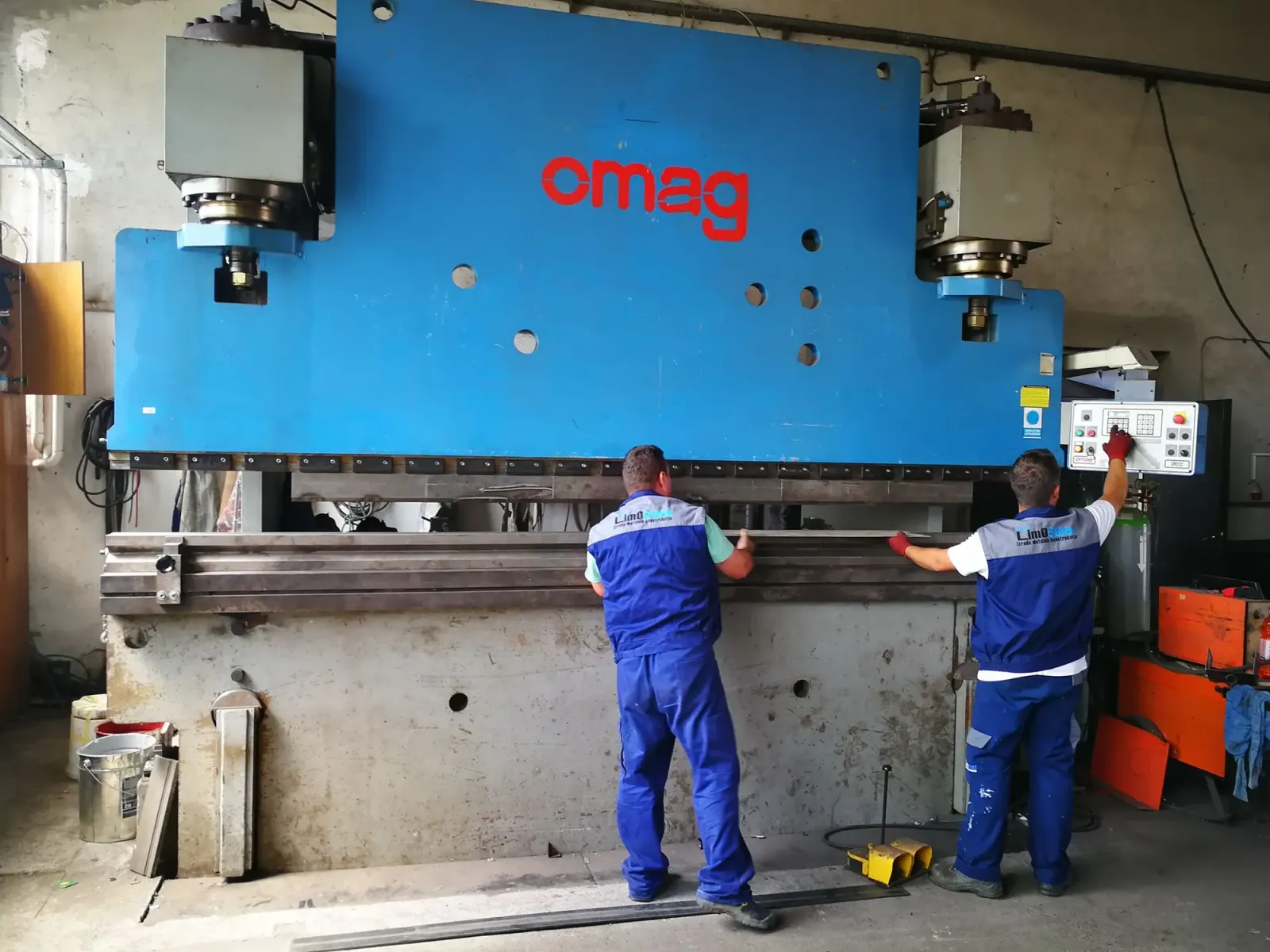
Bending with computer controlled force, angle and positioning. The program stores every bending step, so each part in the batch is identical.
- Manufacturer
- OMAG
- Press force
- 100 t (1,000 kN)
- Bending length
- 3,100 mm
- Control
- CNC, graphical programming
- Back gauge
- multi axis
- Angle repeatability
- ±0.1 mm
MAG welding
WPQRQualified procedure (WPQR)
Welding is carried out to a welding procedure qualification verified by TUV Thuringen. Every figure in this table is taken from the WPQR document.
- Process
- MAG 135 (ISO 4063)
- Parent material
- group 1 steels (ISO/TR 15608)
- Yield point
- up to 355 MPa
- Material thickness
- 6.0 – 24.0 mm
- Filler metal
- G3Si1 (ISO 14341-A)
- Shielding gas
- M21 (ISO 14175)
- Welding positions
- PA, PC, PF
- Joint type
- fillet weld, multi layer
The welding data is taken from the welding procedure qualification record (WPQR Z-64012/18, TUV Thuringen). For exact laser and press brake capacities please contact us — dimensions and thicknesses are verified before a quotation is confirmed.
Six steps from enquiry to delivery
- 01
Drawing and enquiry
We receive your drawing in DXF, DWG, PDF or STEP — or we produce it from a sketch, a sample or measurements taken on site.
- 02
Review and quotation
We check feasibility, material and thickness, plan the operation sequence and send a quotation with a lead time.
- 03
Preparation and nesting
Parts are nested on the sheet so that material use is maximised and the price per piece comes down.
- 04
Cutting and bending
We cut on the fiber laser, then bend on the CNC press brake following the programmed operation sequence.
- 05
Welding and assembly
Members are welded by the MAG process to the qualified WPQR procedure, or joined with bolted connections.
- 06
Inspection and delivery
We check dimensions and joints, then deliver the parts or carry out erection on site.
← Swipe for all steps →
Answers to what you ask most often
If your question is not answered here, give us a call — we check feasibility before sending a quotation.
Fiber laser cutting is a process in which a high energy density beam is carried through an optical fibre to the cutting head and focused into a spot a few tenths of a millimetre across. The material melts instantly at that point and an assist gas jet blows the melt out of the kerf. The result is a narrow cut, a minimal heat affected zone and a clean edge that in most cases needs no rework.
CNC stands for Computer Numerical Control, which means a computer governs the whole process — from press force to sheet positioning. Angle, tool penetration depth and back gauge position are set in the program and the machine repeats them without deviation. That is why the hundredth part in a batch is identical to the first, with no trial bending and no scrap.
We accept DXF, DWG, PDF and STEP files. If you have no drawing, we produce one from your sketch, a sample, or measurements taken on site. For quotations a DXF is quickest, because the geometry can be checked and nested straight away.
We also make single pieces. Laser cutting carries no tooling cost, so a one off prototype is economically viable. On larger quantities the price per piece falls thanks to better sheet utilisation and a prepared bending program.
There are three main ones: high load capacity at low self weight (longer clear spans, lighter foundations, more usable space), speed of erection (members are fabricated in the shop while site preparation runs in parallel) and flexibility, or modularity — the building can later be extended, built onto, or dismantled and relocated.
By welding or by bolted connections. Welding produces rigid, monolithic and permanent joints in which the parts fuse into a single element. Bolted connections produce demountable joints, so the structure can be erected on site and later dismantled, relocated or extended. The choice depends on the structural design, the erection conditions and whether later modification is expected.
We weld by the MAG process (ISO 4063: 135) to a welding procedure qualification verified by TUV Thuringen (WPQR Z-64012/18). The procedure is qualified for group 1 steels with a yield point up to 355 MPa and parent material thicknesses from 6 to 24 mm, in positions PA, PC and PF.
Structural steel, stainless steel, aluminium and galvanised sheet — as plate, square and round tube, and profiles. If you have a specific material or thickness, send us the details and we will check feasibility before confirming a quotation.
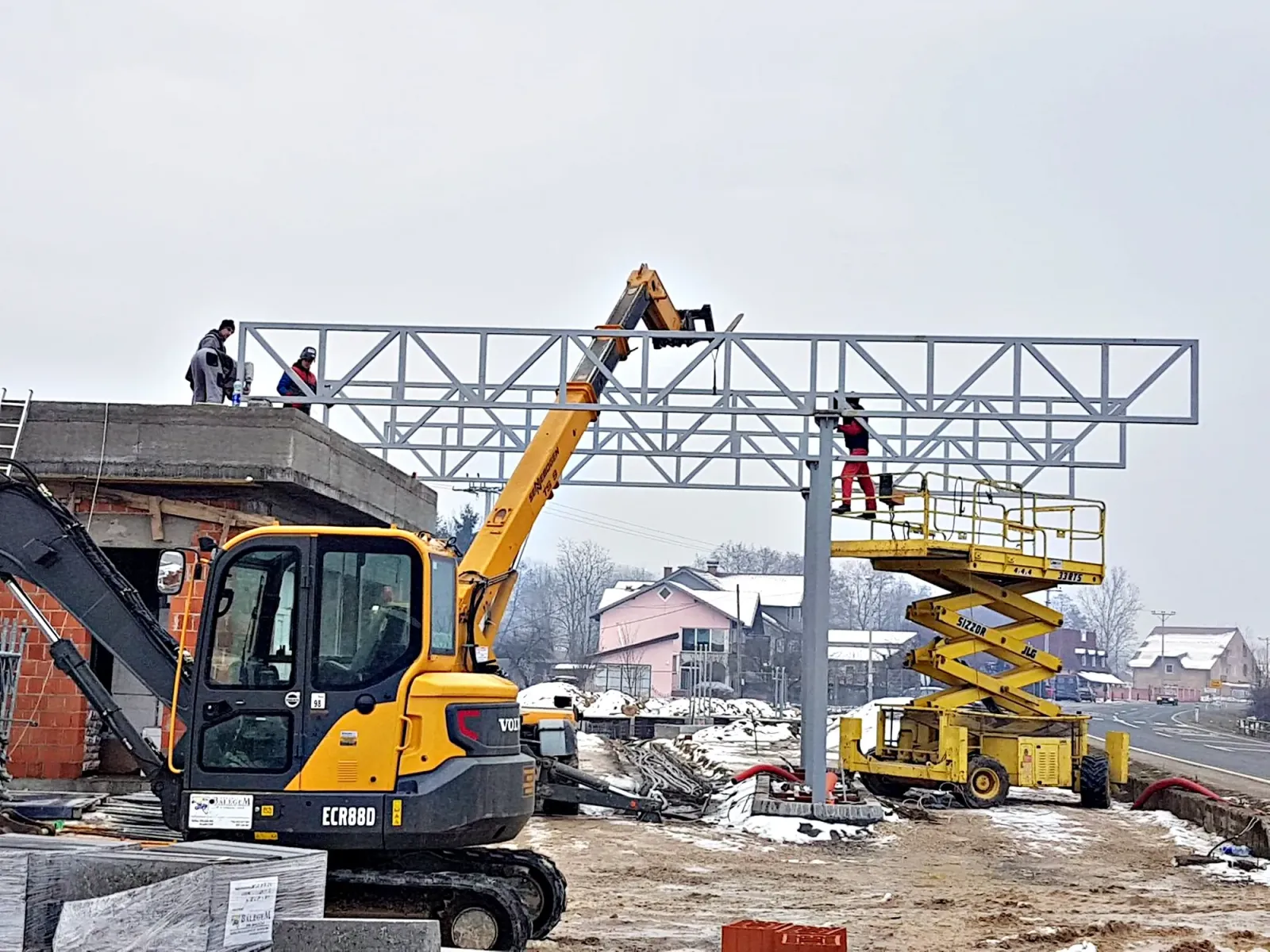
Yes. For steel structures and canopies we fabricate the members in the shop and erect them on site with our own crew. Dimensions are verified on site before fabrication so that erection goes through without rework.
Send a drawing or a description of the job to limosteel@hotmail.com or call us on +387 61 485 322. A quotation needs the material, thickness, quantity and a drawing or measurements. If any of that is undefined, we come back with questions and propose a solution.
Send your drawing — you get a quote with a lead time.
We need the material, thickness, quantity and a drawing or measurements. If any of that is undefined, we come back with questions and propose a solution.